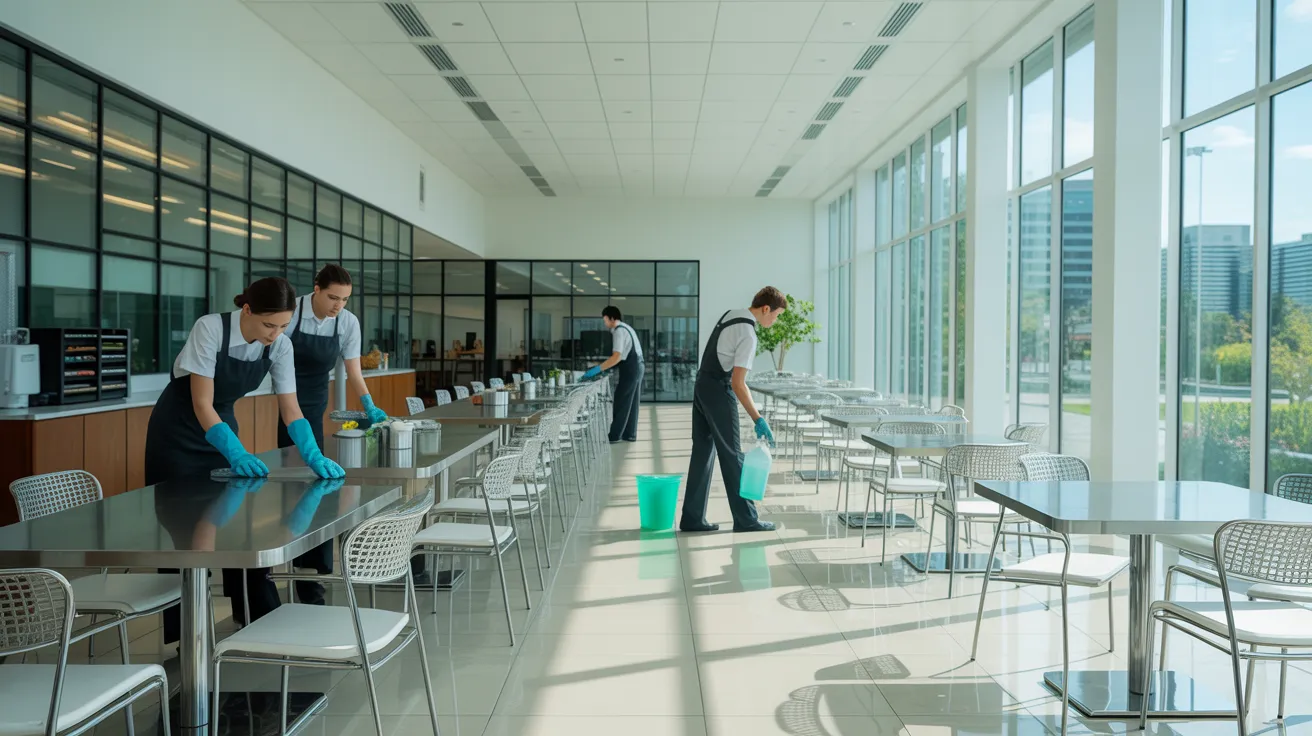
Commercial cleaning and food hygiene professionals in Brampton assist food establishments, commissaries, baking facilities, warehouses, and mobile food services maintaining standards. They decontaminate regularly touched surfaces, food preparation surfaces, equipment, floors, drains, restrooms, and food handling spaces using certified products, at correct dilution, and documenting contact times. You need regular sanitation based on hazard level, volume, allergens, and regulatory assessments, plus documented proof backing HACCP, quality reviews, and regulatory adherence. The following information outlines what strong sanitation programs must contain.
Key Takeaways
- Sanitation technicians in Brampton work with restaurants, grocery departments, commissaries, warehouses, bakeries, schools, mobile vendors, and allergen-sensitive operations.
- Area-specific procedures disinfect high-touch surfaces, food-contact equipment, kitchens, floors, drains, restrooms, and storage areas for eliminating cross-contamination.
- Approved specialists confirm approved sanitizer dilution, suitability, and contact time, then document finalization with tests, reviews, and corrective-action records.
- Sound sanitation calendars account for hazard, production rate, format changes, spills, and standards when distributing regular, regular, and annual activities by section.
- Vendors ought to possess hazard analysis knowledge, public-health understanding, safety training preparation, coverage, endorsements, color-coded tools, and compliance-ready hygiene files.
Food Safety Cleaning Requirements for Brampton Operations
You must follow food safety cleaning if your facility is falls under public health review, food regulations, or HACCP systems. This covers eateries, dining areas, supply warehouses, retail departments, meat counters, fish departments, general stores, and facility-based kitchens.
You'll additionally need compliant food safety cleaning in distribution warehouses, production plants, frozen storage areas, commercial bakeries, educational meal programs, banquet venues, and food delivery services. Mobile and temporary operations apply too, such as food trucks, festival vendors, and pop-up establishments. If your workers handle raw materials, divide prepared dishes, warm finished meals, or maintain allergen storage, your location requires written cleaning standards. In Brampton, cleanliness remains required; it comprises regulatory, business, and safety adherence.
What Services Do Brampton Cleaning Experts Provide?
Your facility requires professional cleaners who sanitize all high-touch areas, cooking and food prep areas, floors, and restrooms to maintain food safety compliance and public health standards. These zones receive attention because they represent the most significant contamination risk, trip and slip dangers, and breaches of sanitation codes.
By understanding their service scope, you can make sure your facility's cleaning procedures satisfy all operational and regulatory requirements.
Critical High-Touch Surface Cleaning
establish a cleaning protocol
Preventing contamination spread through rotating towels, maintaining directional processes, and separating disinfection materials by location ensures your disinfection plan stays verifiable, documented, and inspection-ready.
Cooking Zones, Walking Surfaces, and Restroom Environments
Professional cleaners in Brampton prioritize kitchens, floors, and restrooms given that each location involves specific contamination control, falling hazards, and health code requirements. In industrial kitchens, you need grease removal from cooking stations, appliance surfaces, drain systems, preparation areas, and backsplashes to minimize contamination and pest pressure.
Floor care that is recorded should equally be anticipated. Technicians scrub and extract buildup from tile grout, ceramic surfaces, and vinyl floors, then apply proper moisture management so you can reduce slip incidents and maintain code-compliant conditions. They also address entryways where moisture and debris migrate indoors.
Restroom sanitation involves disinfecting touchpoints, fixtures, partitions, dispensers, and waste containers, replenishing amenities and managing odor. They also service restaurant moprooms, where chemical storage, sink hygiene, and drainage conditions can affect sanitation compliance and staff safety daily.
How Food Safety Cleaning Benefits Brampton Operations
To comply with health code requirements and pass inspections, Brampton facilities must maintain food-safe cleaning standards. You also reduce cross-contamination by cleaning and sanitizing food-contact surfaces, equipment, and high-touch areas correctly. Most importantly, you safeguard public health by lowering the risk of foodborne illness in your facility.
Health Code Compliance
Because Brampton food companies operate under stringent health requirements, food safety cleaning directly impacts your competence to adhere to health code requirements, safeguard customers, and sidestep enforcement action. You must maintain sanitized food contact points, written maintenance records, correct sanitizer application, and traceable training practices that align with municipal and provincial inspection expectations.
Excellent cleaning standards enables allergen reduction by limiting particles on common tools plus high-touch areas. If your cleaning standards weaken, you expose yourself to violations, remedial directives, loss of reputation, and possible interruption to service during additional reviews or regulatory actions.
Cross-Contamination Prevention
Adhering to health code standards requires your expertise in stopping cross-contamination throughout routine preparation and sanitation work. You need to isolate uncooked items from finished products, clean prep surfaces between tasks, and keep chemicals away from food-contact items. Organized systems minimize contamination events and maintain ongoing regulatory adherence.
Building allergen isolation prevents key allergens from reaching common workstations, storage, or apparatus. Leverage separate cutting boards, colored implements, and precise instrument labeling so team members won't blend products during preparation or service.Enforce handwashing after handling uncooked meats, shellfish, egg items, or allergen substances. Swap wiping cloths regularly, and confirm disinfectant efficacy using test strips. When your team follows these practices each shift, you create a cleaner, safer operation that exceeds Brampton's safety standards daily.
Public Health Protection
If food safety cleaning deteriorates, you don't merely risk a failed inspection—you amplify the risk of pathogenic contamination affecting customers, staff, and the broader Brampton region. You also weaken your role in safeguarding community wellness, especially in busy food facilities where contamination can spread quickly through surfaces, equipment, and touchpoints.
You require sanitation protocols that remove contaminants, disinfect correctly, and confirm effectiveness. This requires following exposure times, employing authorized sanitizers, documenting procedures, and instructing staff to satisfy regulatory standards. These mechanisms support pathogen reduction by decreasing microbes before contaminating food or surfaces. Across Brampton, strong cleaning protects at-risk populations, limits outbreak risk, and shows your diligence. When you follow standards, you exceed regulations—you meaningfully reduce risk and facilitate secure food handling city-wide.
Why Is Cleaning Essential for Food Safety Compliance?
Establishing thorough cleaning protocols improves food safety compliance by minimizing contamination hazards, preventing pathogen multiplication, and keeping your facility aligned with sanitation requirements under HACCP-based programs and public health regulations. You confirm that product-contact timely resource areas stay visibly clean and microbiologically controlled, supporting documented preventive controls and inspection readiness.
Comprehensive cleaning further reinforces allergen control by eliminating residues that can lead to undeclared allergen exposure. When you match established sanitation practices with compliance training, your staff can follow consistent approaches, apply approved chemicals correctly, fill out documentation properly, and address irregularities before they escalate. Ongoing cleaning facilitates traceability, verifies corrective actions, and exhibits commitment throughout audits. Furthermore, it aids you maintain quality assurance, copyright operational adherence, and minimize the possibility of punitive measures, mass recalls, formal complaints, and preventable safety threats.
What's the Ideal Time to Arrange Commercial Cleaning?
maintenance activities.
Schedule drains, ventilation, storage racks, and hard-to-reach areas every week or every month, based on inspection data and sanitation records.
How Do You Choose Brampton Cleaning Experts?
Begin by evaluating providers based on sanitation compliance standards—not solely on price alone. You should confirm that each organization comprehends CFIA, public health, and HACCP-aligned expectations applicable to your facility. Request insurance certificates, WHMIS compliance, staff training documentation, and oversight procedures. Assess whether technicians recognize cross-contamination risks, chemical handling protocols, and verifiable sanitation records.
You should also assess business dependability and responsibility. Request references from Brampton food businesses, then examine response times, corrective-action procedures, and communication standards. Confirm the company supports supplier audits and can present inspection-ready documentation when regulators or third parties request evidence. Check whether equipment maintenance is performed, colour-coded tools are used appropriately, and site-specific hazards are recognized. A competent service protects regulatory adherence, product quality, and your brand reputation.
What's covered in a sanitation cleaning strategy?
Write out a plan that outlines every sanitation task, standard, and responsibility before starting production. You should record cleaning frequencies, approved chemicals, dilution rates, contact times, tools, and verification methods for each area, surface, and device. Ensure you include pre-operational inspections, corrective actions, and employee training requirements.
Your program should also address cross-contamination controls, waste handling, pest-prevention measures, and documented schedules for restrooms, drains, floors, and food-contact areas. Explain how you'll separate raw and ready-to-eat processes, support ingredient tracking, and ensure accurate allergen labeling through validated cleaning between product changes. You should assign accountability, keep signed records, and review results against regulatory standards, HACCP controls, and customer requirements. When gaps appear, update procedures immediately and re-educate staff.
Commonly Requested Questions
Can sanitation providers accommodate nighttime operations in Brampton properties?
If you run regulated facilities, you'll also require documentation that enable audits and maintain assurance.
Do Brampton cleaning experts provide emergency spill response solutions?
Yes, you can find Brampton sanitation professionals to offer emergency spill response services. They manage hazardous materials, assess risks, contain contamination, and begin swift cleanup to reduce exposure and operational disruption. You should confirm their response times, professional credentials, PPE protocols, and disposal procedures. If your facility must comply with industry standards, select a service that records events, maintains regulatory procedures, and supports audit readiness.
Will plant-based disinfectants sanitize safely food-contact surfaces?
Definitely, natural disinfectants operate safely on surfaces contacting food if you select products labeled food safe that comply with regulatory standards. You should check exposure duration, concentration levels, and rinse protocols in advance of use. Plant based formulas decrease chemical burden, but you must have demonstration of efficacy against specific pathogens. To preserve residue-free areas, adhere to manufacturer directions precisely and verify your disinfecting agent complies with food sanitation requirements.
Do cleaning schedules allow for seasonal shifts?
Absolutely, cleaning plans are customizable for production fluctuations. Modify timing, staffing, sanitizers, and testing procedures to align with seasonal patterns while sustaining compliance standards. Decrease production interruptions through timing cleaning surrounding line changes, maximum output, and operational patterns. Additionally, update SSOPs, training, and environmental testing to capture temporary risks, new allergens, or higher contamination levels. Frequent reviews maintain your strategy efficient.
Will commercial cleaners teach employees on sanitation best practices?
Yes, commercial cleaners typically educate your team on hygiene standards. You receive employee instruction on correct chemical application, exposure periods, cross-contamination prevention, equipment disassembly, and documentation. They typically align training with HACCP, GMP, and CFIA or local public health requirements. Many perform hygiene inspections to confirm adherence, identify gaps, and strengthen remedial steps. This helps you maintain consistent procedures, succeed in audits, and reduce food safety risks daily.
Final Thoughts
By collaborating with Brampton commercial cleaning and food safety professionals, you aren't just organizing—you maintain your facility inspection-ready and your practices in compliance. From production areas to kitchen zones, every clean surface and maintained corner reduces pest risk and prevents costly issues. By scheduling cleanings on the right schedule and following a documented cleaning plan, you secure your team, customers, and your standing. In a heavily controlled environment, clean spaces are mandatory—they're essential to successful operations.